
Roulette game development is the work of building a certified outcome engine, a bet-validation and payout layer, a table interface with convincing animation, and the wallet and aggregator connections that let a licensed operator offer a wheel to real-money players. Two product families dominate: RNG-based virtual roulette, where software draws the winning number, and live-wheel roulette, where a physical wheel in a studio is read by sensors and streamed to players. This guide explains the variants, architecture, payouts, house edge, certification and integration work involved, so you can plan roulette inside a wider casino game development or live casino software roadmap. Operators need the right licence for each market, and players must be of legal age (18+ or 21+ depending on jurisdiction).
Roulette Game Development: European, American and French Variants
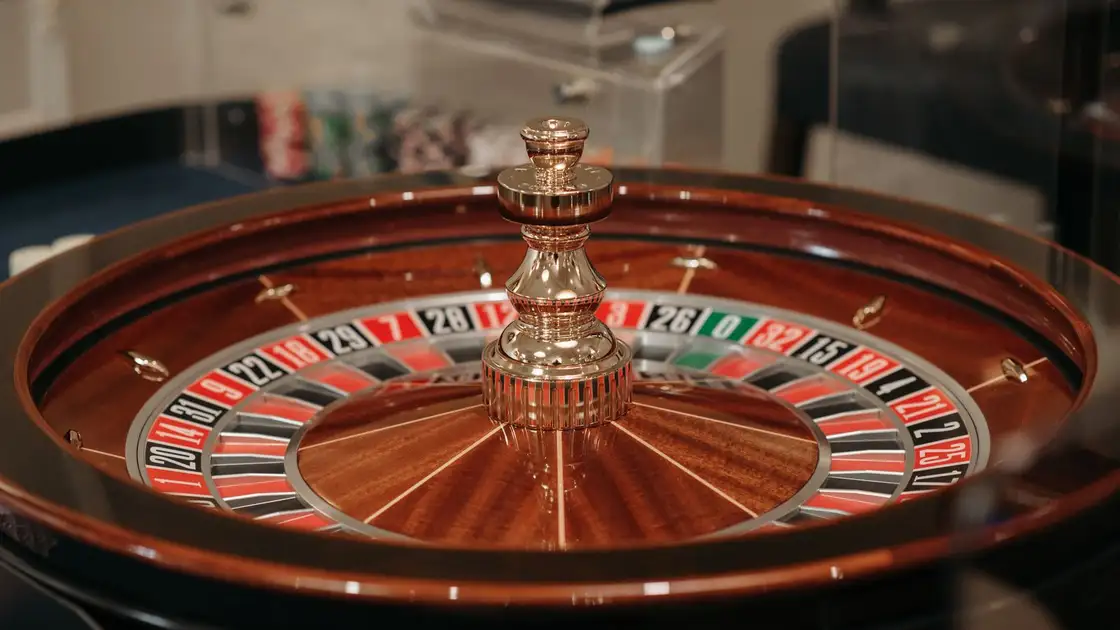
Most roulette game development projects start with a rule set, because the wheel layout and table rules decide the maths. The three variants players expect are compared below.
| Variant | Pockets | Zero layout | House edge on a straight-up bet | Notable rule |
|---|---|---|---|---|
| European | 37 | Single 0 | 2.70% | Even-money bets lose when the ball lands on 0 |
| American | 38 | 0 and 00 | 5.26% | Optional five-number bet (0, 00, 1, 2, 3) carries a higher edge |
| French | 37 | Single 0 | 2.70% (about 1.35% on even-money bets with La Partage) | La Partage or En Prison on even-money bets, announced bets, racetrack layout |
We model each variant as configuration (wheel sequence, pocket count, payout table and special rules) rather than as separate codebases, so adding a variant does not mean forking the game. The American wheel matters most for US-facing operators, while French rules suit European audiences who value the lower edge on even-money bets.
RNG-Based vs Live-Wheel Roulette
RNG roulette is software end to end. A certified random number generator selects a pocket, the server records the result, and the client animates a wheel and ball that land on it. It is cheap to run per round, available around the clock, easy to localise, and suits instant-play lobbies, mobile and crypto-first brands.
Live-wheel roulette uses a physical wheel in a studio, a dealer, cameras and usually a ball-detection or wheel-reading system that reports the winning number to the platform. It delivers trust and atmosphere, but adds studio operations, video streaming, dealer scheduling and a separate set of integrity controls. Our live casino app development work covers the player-facing side of that experience. The platform should treat the wheel reading as untrusted input until it is validated: cross-checked against dealer confirmation, with defined handling for no-result and re-spin rounds, and with video and result timestamps kept in sync.
Many operators start with RNG roulette for a fast launch and lower fixed costs, then add live-wheel tables for VIP players, sharing one bet engine and wallet layer.
Game Engine, Physics and Animation
The key design rule for virtual roulette is outcome first, animation second. The server draws the number with the certified RNG, commits it to the round record, and only then tells the client what to show. The wheel and ball are a presentation of a decision that has already been made, so the physics never determine the result. If a simulated ball could land anywhere, the real distribution of outcomes would depend on frame rate, device and floating-point behaviour, which no test lab would accept.
That still leaves plenty of craft in the client. The animation layer computes a ball trajectory that ends exactly on the pre-selected pocket: spin speed, deceleration, bounces off the diamonds and a final settle all look physical but are authored to converge on the target. Teams build this in HTML5 with Pixi.js for lightweight lobbies, or in Unity where 3D camera angles, replays and richer effects matter. Key engineering points:
- Deterministic replay: store the round ID, pocket and timings so support can reproduce what a player saw.
- Reconnect handling: a player who drops mid-spin must see the settled result and correct balance on return.
Bet Types, Payouts and House Edge
Roulette offers inside bets on specific numbers and outside bets on groups. The payouts below follow European single-zero rules.
| Bet | Numbers covered | Payout (winnings per unit staked) |
|---|---|---|
| Straight up | 1 | 35 to 1 |
| Split | 2 | 17 to 1 |
| Street | 3 | 11 to 1 |
| Corner | 4 | 8 to 1 |
| Six line | 6 | 5 to 1 |
| Dozen or column | 12 | 2 to 1 |
| Red or black, odd or even, high or low | 18 | 1 to 1 |
On a single-zero wheel every one of these bets carries the same theoretical house edge of 1/37, or 2.70%, because payouts are set at fair odds minus the zero pocket. The American wheel's second zero doubles that to 5.26%, and the five-number bet is worse at about 7.89%. House edge and RTP are two views of one figure: a 2.70% edge is an RTP of 97.30%.
The bet engine must validate every wager on the server: table limits, maximum exposure per spin, legal bet combinations (a split must cover adjacent numbers) and currency precision. Use integer minor units and a single payout function covered by property-based tests against the published table, never floating-point arithmetic. Racetrack and neighbour bets expand into combinations of these basic bets, which keeps the maths auditable.
Speed, Auto and Multi-Table Roulette
A roulette round is short and repeatable, so format variations are an efficient way to widen a lobby without building a new game.
- Speed roulette: shorter betting windows and faster rounds, which demand tight bet-cutoff timing and low-latency state sync.
- Multi-table: players watch or bet on several tables in one view, multiplying concurrent sessions and messages per user.
- Multiplier and side-bet formats: random multipliers on selected numbers or bonus bets, which change the maths and need separate certification of the modified payout model.
Technically, a round is a small state machine: betting open, betting closed, result committed, payout, round closed. Each transition is timestamped on the server so late bets are rejected deterministically rather than by whichever packet arrived first. Shared tables fan results out to seated players over WebSocket channels, with Redis holding round state and Kafka carrying the settlement events that feed wallet, reporting and responsible-gambling checks. Multi-table play needs per-user rate limits and a client that pauses rendering of background tables to save battery. It is the same real-time pattern used in poker game development, adapted to a house-banked game.
UI, Mobile and Player Experience
Roulette players want clarity on the table. A good interface offers chip selection, one-tap re-bet and double, undo, a clear history of recent numbers, and hot and cold statistics shown as information rather than prediction, since the wheel has no memory and the interface should not imply otherwise. On mobile, chips must be thumb-reachable and inside-bet areas large enough to tap.

Accessibility and localisation matter too, from colour-blind-safe reds and blacks to multiple languages. Responsible gambling tools belong inside the table: session timers, reality checks and limits tied to the player account. Our casino app development practice treats the roulette table as one module inside a wider native or PWA experience.
Certification: GLI-19, iTech Labs and Regulators
Certification is a core part of roulette game development, because a title usually cannot go live in a regulated market without independent testing. Labs such as GLI, iTech Labs, eCOGRA and BMM Testlabs test the RNG's statistical randomness and scaling method, verify that payouts and house edge match the published rules, and review the system against technical standards such as GLI-19 for interactive gaming systems. Regulators including the UKGC, the MGA, New Jersey DGE and the Nevada Gaming Control Board each have their own requirements and approval routes, so a game certified for one market may need extra work for another.
What we prepare for the lab: build access, RNG documentation covering seeding and scaling (mapping a raw random value onto 37 or 38 pockets without modulo bias), game rules and maths documents, round logs and audit trails, and a clearly versioned build. For live-wheel products, studio and dealer procedures are assessed alongside the software. Plan test cycles into the schedule, because re-certification is needed whenever the RNG, payout logic or rules change. Our RNG integration and testing service, the iGaming certification testing guide and our casino licensing and compliance support help with market-by-market planning.
Wallet, Aggregator and Platform Integration
Good roulette game development treats integration as a first-class feature, because a roulette game rarely lives alone. It talks to the operator's player wallet, a game aggregator or platform, and the reporting stack. Typical patterns:
- Seamless wallet: the platform keeps the balance; the game calls debit on bet, credit on win and rollback on failure, each with an idempotent transaction ID so retries never double-charge.
- Round reporting: every round exposes an ID, bets, result and payout for regulator and finance reports.
To distribute roulette to many operators, expose it through a standard casino game aggregator API so partners integrate once and receive the whole catalogue. Behind it, casino backend development provides microservices, PostgreSQL ledgers and observability. Pending-round recovery is the hard part: if a wallet call times out mid-round, the platform needs a defined resolve, retry or void policy.
How Sudonex Builds Roulette Games
Our roulette game development approach designs the stack as separate services: a certified RNG and game-maths service, a round and bet engine, a wallet adapter, a lightweight HTML5 or Unity client and an admin back office. We build test harnesses that simulate millions of rounds against the published payout table, and prepare the documentation lab testers ask for. Timeline and budget depend on the number of variants, RNG versus live wheel, studio needs and target markets; as an indicative guide, a single-variant RNG title is a far smaller project than a multi-variant live-wheel suite. Our casino game development cost guide explains the main cost drivers.
Ready to scope your roulette product? Contact Sudonex to discuss variants, certification and integration. Operators remain responsible for holding valid licences and for offering games only to eligible players.