SEO METADATA
10 SEO Keywords: custom slot game development, slot game development, online slot game development, casino slot software development, custom slot machine games, iGaming slot development, slot game design services, mobile slot game development, RNG certified slot games, slot game development company
Here is a question worth sitting with: when a player opens your casino platform and sees the same Pragmatic Play and NetEnt titles they can find on fifty other sites, what is actually keeping them there? The answer, more often than operators admit, is nothing distinctive. They are staying because the games load fast and the lobby is clean — not because your brand means anything to them as a gaming experience.
That is the problem that custom slot game development solves. Not just a reskinned template with your logo on the loading screen, but a game built from mathematical first principles — a unique volatility curve, a bonus mechanic no competitor has, a narrative and visual identity that belongs exclusively to your platform. A game your players associate with you, not with the studio that made it.
Sudonex.com builds custom slot games for casino operators, gaming startups, and iGaming platforms that want to move beyond a standard aggregator catalogue and own a piece of their product. This guide covers what the development process actually involves, what separates a commercially successful custom slot from an expensive failure, and why the technical and regulatory foundations matter as much as the creative concept.
What Is Custom Slot Game Development?
Featured Snippet — Definition
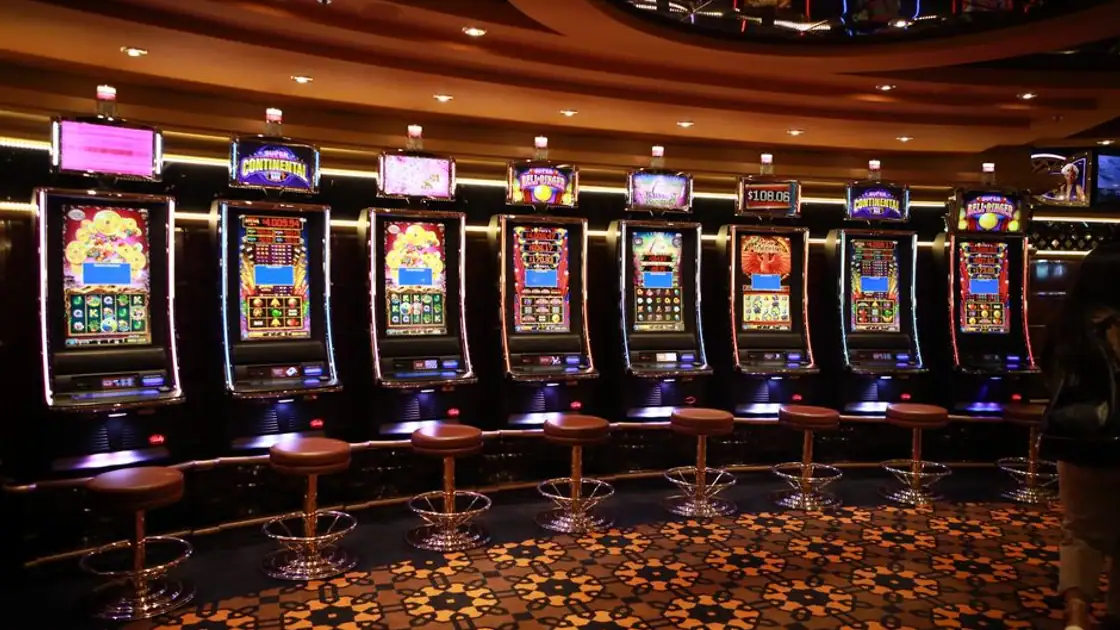
Custom slot game development is the end-to-end process of designing, building, and certifying a slot game built exclusively for a specific operator or brand. Unlike white-label or licensed third-party titles, custom slots are developed from original mathematical models, unique game mechanics, brand-specific visual and audio assets, and proprietary bonus systems — then submitted for RNG certification before deployment on any licensed iGaming platform.
The distinction from off-the-shelf solutions matters commercially, not just creatively. When you license a Pragmatic title, every other casino using the same licence is competing with you on the same game. The player has no reason to associate that game with your brand. Custom slot game development breaks that dynamic: the game exists exclusively on your platform, it is built around your player data and preferences, and every session reinforces your brand identity rather than a third-party studio's.
Sudonex.com's custom slot game development service covers the complete production lifecycle — from initial concept and mathematical modelling through art direction, engineering, QA, RNG certification, and platform integration. Operators receive a production-ready, independently certified slot game that meets the technical standards of their target licensing jurisdiction.
Why Custom Slot Games Drive Stronger Platform Performance
The commercial argument for custom slot game development is grounded in measurable player behaviour metrics that consistently favour exclusive content over catalogue titles:
• Player retention — Exclusive titles give players a reason to return specifically to your platform rather than opening a competitor's lobby. The game they want is only available in one place.
• Brand differentiation — In a market where most casino platforms share 80% of the same game catalogue, a custom slot with recognisable visual identity and mechanics becomes a brand asset, not just a product feature.
• Session length and engagement — Custom games built around your specific player data — average session duration, preferred volatility range, bonus engagement rate — outperform generic titles on engagement metrics because they are designed for your audience, not a global average.
• Margin control — Licensing third-party titles means paying ongoing revenue share to the studio. A custom game developed and owned by you carries no ongoing royalty obligation — the development cost is a one-time capital investment.
• Cross-promotion — Custom games can be designed around seasonal events, sports tournaments, or loyalty programme tiers that are specific to your platform — creating promotional hooks that third-party titles structurally cannot provide.
Sudonex.com works with operators at the brief stage to establish which of these objectives takes priority in a given project, and the game design document (GDD) and mathematical model are built to serve those specific commercial goals — not generic iGaming best practices.
The Custom Slot Game Development Process: 9 Phases
Featured Snippet — Development Process Steps
The custom slot game development process follows nine phases: (1) Concept and commercial brief, (2) Game Design Document (GDD) creation, (3) Mathematical modelling and RTP/volatility design, (4) Graphics brief and art direction, (5) Asset production — visuals, animations, audio, (6) Game engine development and integration, (7) Internal QA and playtesting, (8) Independent RNG certification by an approved ITL, (9) Platform integration and go-live.
1. Concept and Commercial Brief — Every Sudonex.com custom slot development engagement begins with a structured brief: target jurisdiction, player demographic profile, preferred RTP range, volatility target, theme and narrative direction, bonus mechanic priorities, and platform integration requirements. This brief becomes the governing document for all downstream decisions — preventing scope creep and ensuring the finished game serves the operator's commercial objectives.
2. Game Design Document (GDD) — The GDD is the technical and creative specification for the entire game. It defines reel configuration (3x5, 6x4, cluster pays, etc.), payline structure, symbol hierarchy (high-pay, low-pay, scatter, wild variants), all bonus mechanics with trigger conditions and award structures, the mathematical payout table, user interface layout, and the complete audio/visual brief. The GDD is agreed and signed off before any art or code is produced. Sudonex.com treats the GDD as a contractual document — nothing is built until it is approved.
3. Mathematical Modelling and RTP/Volatility Design — This is the phase that determines whether a slot game is commercially viable. Sudonex.com's mathematics team builds a full probability model for the game — calculating the theoretical RTP, hit frequency, volatility index, bonus contribution to RTP, and maximum win potential from first principles. The model is run through high-volume simulation (minimum 100 million to 1 billion rounds) before a single line of code is written for the game engine.
4. Graphics Brief and Art Direction — The graphics brief is a separate document derived from the GDD that defines visual style (2D, 3D, hand-drawn, pixel art), colour palette, animation style, symbol artwork specifications, UI component dimensions, and resolution requirements for all target platforms (desktop, mobile, tablet). Sudonex.com maintains an internal art team for full-production titles and manages external specialist studios for projects requiring specific visual styles.
5. Asset Production — Visuals, Animation, and Audio — All game assets — symbol artwork, background illustrations, UI components, animated bonus sequences, and the full audio package (background music, win jingles, ambient sound, voiceover if applicable) — are produced to the specifications defined in the graphics brief. Every asset is produced at source resolution to support future platform adaptations without quality degradation.
6. Game Engine Development — The game engine is built on a Unity or HTML5/PixiJS foundation depending on the target platform distribution. The engine implements the mathematical model defined in phase 3 exactly, with the RNG integrated at the core of every spin result. Sudonex.com's development standard requires that the RNG implementation be isolated and auditable — meaning the ITL can review the RNG integration code independently from the game logic.
7. Internal QA and Playtesting — Sudonex.com runs a multi-cycle internal QA process covering: mathematical verification (empirical RTP within tolerance of theoretical model across 10 million simulated rounds), functional testing across all browser environments and device types, edge case testing for all bonus trigger and payout scenarios, and UX playtesting with a target demographic sample. Issues identified at this stage are significantly cheaper to resolve than post-submission defects.
8. Independent RNG Certification — Before the game can be deployed on any licensed iGaming platform, it must be certified by an approved Independent Test Laboratory (ITL). The ITL reviews the RNG source code, performs NIST SP 800-22 and Dieharder statistical tests on the integrated RNG output, verifies the game's empirical RTP against the theoretical model, reviews the software build for integrity (SHA-256 checksums), and issues a certification mark. Sudonex.com manages the complete ITL submission process and prepares clients for regulator-specific requirements.
9. Platform Integration and Go-Live — The certified game is integrated into the operator's platform via the applicable RGS (Remote Game Server) API. Sudonex.com supports integration with major aggregator networks and direct platform APIs. Post-launch, Sudonex.com monitors game performance metrics against the mathematical model and prepares any maintenance certification required for subsequent updates.
RTP, Volatility, and Mathematical Design: The Commercial Foundation
The mathematical model is the most consequential decision in custom slot game development. Operators who treat it as a technical formality — rather than a commercial design instrument — typically produce games that either drain GGR faster than expected or fail to engage players because the win frequency feels wrong.
Understanding RTP in Custom Slot Design
Return to Player (RTP) is the percentage of all wagered funds that the game is mathematically designed to return to players over an infinite number of rounds. An RTP of 96% means the game retains 4% as the house edge (GGR contribution). The optimal RTP range for a custom slot depends on the target jurisdiction and player base:
| Market / Jurisdiction | Typical RTP Range | Player Expectation | Operator Margin |
|---|---|---|---|
| UK (UKGC) | 95% – 97% | High — players research RTP | 3% – 5% |
| Malta (MGA) | 94% – 96% | Moderate — RTP displayed | 4% – 6% |
| Nordics | 96% – 97.5% | High — regulated disclosure | 2.5% – 4% |
| LATAM / Asia-Pacific | 92% – 96% | Moderate — bonus-driven | 4% – 8% |
| Crypto / Offshore | 95% – 98% | Variable — provably fair | 2% – 5% |
Volatility Design: Matching the Player Experience to Your Audience
Volatility (also called variance) defines the risk profile of the game — how frequently wins occur and how large they are relative to the bet. It is the single most important factor in player engagement and session length:
• Low volatility — Frequent small wins, extended sessions, lower maximum win potential (typically 200x – 500x bet). Best suited for casual players with conservative bankroll management.
• Medium volatility — Balanced win frequency and size, moderate maximum win potential (500x – 2,000x bet). The broadest appeal across player demographics. Sudonex.com recommends medium volatility as the default for new operator-branded titles.
• High volatility — Infrequent but large wins, shorter average sessions, high maximum win potential (2,000x – 25,000x+ bet). Best suited for experienced players and high-roller segments.
• Buy Feature / Bonus Buy — A mechanic that allows players to purchase immediate access to the bonus round at a fixed multiplier (typically 50x – 100x bet). Increases average bet size and RTP contribution from the bonus. Available in jurisdictions that permit feature purchase (not permitted in the UK).
Sudonex.com Mathematical Design Guarantee
Every custom slot developed by Sudonex.com is delivered with a full mathematical model report including: theoretical RTP, hit frequency, volatility index, bonus contribution to RTP, maximum win potential, and simulation results across 1 billion rounds. This report accompanies the ITL certification submission and is provided to the operator as a permanent record of the game's commercial design.
Custom Slot Game Features: What Sudonex.com Builds
Core Reel Mechanics
| Mechanic | Description | Best For |
|---|---|---|
| Classic 3x5 Paylines | Standard 5-reel, 3-row grid with fixed paylines | First custom title, broad appeal |
| Megaways (licensed) | Variable reel rows up to 7, 117,649 ways to win | High engagement, licensed from BTG |
| Cluster Pays | Groups of 5+ matching symbols pay regardless of position | Casual players, modern aesthetic |
| All-Ways / 243 Ways | Any matching symbol across adjacent reels pays | Simplified UX, broad demographic |
| Infinity Reels | Reels added on cascades, no theoretical upper limit | High volatility enthusiasts |
| Split Symbols | Symbols split to fill additional symbol positions | Mid-to-high volatility builds |
Bonus Mechanics
• Free Spins — The foundational bonus mechanic. Triggered by scatter symbols (typically 3+), awarding a fixed or random number of free spin rounds with enhanced mechanics active (multipliers, sticky wilds, reel modifiers). Free spins are the most statistically influential contributor to RTP in most Sudonex.com builds, typically contributing 40% – 60% of total RTP.
• Cascading/Avalanche Reels — Winning symbols are removed and replaced by new symbols falling from above, creating chain win potential from a single spin. Sudonex.com typically pairs cascading reels with a multiplier that increases with each cascade in the chain.
• Pick-and-Click Bonus Rounds — Player-interactive bonus screens where selected items reveal instant prizes, multipliers, or spin awards. Highly effective for player engagement and session length extension.
• Expanding and Sticky Wilds — Wild symbols that expand to fill an entire reel (expanding) or remain in position for subsequent spins (sticky). Sudonex.com designs wild mechanics that integrate directly with the free spins round for compounding win potential.
• Gamble Feature — Post-win mechanic allowing players to risk a portion or all of a win on a binary outcome (higher/lower, red/black) for a multiplied return. Available in jurisdictions that permit the mechanic; not available in UK-licensed titles.
• Progressive Jackpots — A fixed percentage of each bet contributes to a growing jackpot pool, awarded by a trigger condition (randomly, via special symbol, or via bonus round). Sudonex.com designs both standalone (single-game) and networked (cross-platform) progressive systems.
• Buy Feature (Bonus Buy) — Allows players to skip the base game and purchase direct access to the bonus round at a multiplied bet. Available in MGA, Curacao, and most offshore jurisdictions. Not permitted under UKGC licence conditions.
AI-Powered and Blockchain Features
• AI Personalisation Engine — Sudonex.com integrates an AI-driven adaptive difficulty layer that adjusts the presentation of bonus triggers and win celebrations based on individual player behaviour profiles — increasing engagement without modifying the underlying certified mathematical model.
• Provably Fair / Blockchain RNG — For crypto casino and Web3 platform deployments, Sudonex.com builds Provably Fair slot implementations where players can independently verify every spin result using the HMAC-SHA256 algorithm. Server seed, client seed, and nonce are published post-round, enabling third-party verification of every game outcome.
• NFT Integration — Custom slot games can be built with NFT-linked symbol sets or bonus multipliers, allowing operators to tie in-game mechanics to a player's digital asset holdings.
Technology Stack: What Powers a Sudonex.com Custom Slot
| Layer | Technology | Purpose |
|---|---|---|
| Game Engine | Unity (C#) / HTML5 + PixiJS | Core rendering and game logic |
| RNG Implementation | CSPRNG (AES-CTR / ChaCha20) | Cryptographically secure random number generation |
| Backend / RGS | Node.js / Python microservices | Spin result processing, session management, game history |
| Mathematics Engine | Custom simulation suite (Python) | RTP verification, volatility modelling, 1B+ round simulation |
| Blockchain Layer (optional) | Ethereum / Solana / TRON | Provably Fair seed publishing, NFT integration |
| API / Integration | REST + WebSocket | RGS-to-platform integration, aggregator connectivity |
| QA / Testing | Selenium, custom unit test harness | Functional, regression, and cross-browser QA |
| Certification | GLI-11 / iTech Labs compliant | RNG and software integrity certification for ITL submission |
| Asset Pipeline | Unity Addressables / WebPack | Asset bundling and optimisation for multi-platform delivery |
Mobile-First Development
All Sudonex.com custom slot games are built mobile-first — meaning the primary design target is the smartphone screen, with desktop and tablet treated as secondary viewport adaptations. The global iGaming market generates over 70% of slot sessions on mobile devices in 2026. A custom slot that was designed for desktop and adapted for mobile will always be a compromised experience on the device most of your players are actually using.
Sudonex.com's mobile-first standard covers: touch-optimised control placement, adaptive layout scaling across portrait and landscape orientations, compressed asset delivery (WebP textures, Opus audio) for low-bandwidth connections, and frame rate optimisation targeting 60fps on mid-range Android hardware.
RNG Certification and Regulatory Compliance
Every custom slot game must be independently certified by an approved Independent Test Laboratory (ITL) before it can legally operate on any MGA, UKGC, Curacao, or major international platform. This is not optional — it is the technical prerequisite for lawful deployment. Sudonex.com manages the complete certification process as part of every custom development engagement.
What the Certification Process Covers
• Source code review — The ITL inspects the RNG source code for algorithm compliance (CSPRNG standard), seeding and re-seeding procedures, and background cycling behaviour. The RNG must demonstrate statistical independence between consecutive outputs.
• Statistical analysis — The ITL runs the integrated RNG output through NIST SP 800-22 (~96 million bits), Dieharder, and Chi-Squared rolling window tests to confirm that the game's random number output meets the statistical requirements for unpredictability and uniform distribution.
• RTP and maths verification — The empirical RTP of the certified build is measured against the theoretical model across a minimum simulation volume (typically 100 million rounds for standard slots, 51 million records for draw games). The empirical result must fall within the jurisdiction-specified tolerance of the theoretical RTP.
• Software fingerprinting — SHA-256 checksums are generated for all certified software binaries. The certified checksums become the reference point for all future platform deployments — any modification to the game binary requires recertification.
• Supervised build — The final certified build is produced under ITL supervision, with the resulting binaries fingerprinted and submitted to the regulator alongside the certification report.
Monetisation Models for Custom Slot Games
| Model | How It Works | Best For | Revenue Profile |
|---|---|---|---|
| Platform Exclusive | Game operates only on your platform — no licensing to competitors | Brand differentiation strategy | All GGR retained by operator |
| Licenced to Third Parties | You own the game but licence it to other operators | Studio-model operators | Royalty per GGR + upfront fee |
| Progressive Jackpot Network | Cross-platform jackpot pool grows from all connected operators | High-traffic networks | Network effect on player acquisition |
| Bonus Buy Revenue | Players purchase direct bonus access at 50x–100x bet | High-value player segments | Higher average bet on bonus events |
| Tournament Integration | Game features in time-limited leaderboard tournaments | Retention and reactivation campaigns | Increased session frequency |
| NFT / Token Economy | In-game assets tied to tradeable NFTs or operator token | Web3 / crypto casino platforms | Secondary market + in-game spend |
Custom Development vs. White Label Slots: Which Is Right for You?
Featured Snippet — Custom vs. White Label Comparison
Custom slot game development produces a game owned exclusively by the operator, with unique maths, mechanics, and branding — a permanent IP asset. White label slots use a shared game framework reskinned with the operator's branding; the underlying game is available to all licensees. Custom development requires higher upfront investment but eliminates ongoing royalties and creates a proprietary brand differentiator.
| Factor | Custom Development (Sudonex.com) | White Label / Licensed Slot |
|---|---|---|
| Ownership | Full IP ownership by operator | Licensed — no ownership of underlying game |
| Exclusivity | Game exists only on your platform | Available to all studios licensees |
| Branding | Built from scratch for your brand | Template reskin — visual only |
| Maths Model | Custom RTP/volatility for your players | Fixed maths shared across all licensees |
| Bonus Mechanics | Proprietary — designed to your spec | Standard mechanics from template library |
| Ongoing Cost | Zero royalties — one-time development investment | Revenue share on every session |
| Time to Market | 4–6 months (full custom) | 2–6 weeks (reskin) |
| Certification | Full ITL certification (managed by Sudonex.com) | ITL certification transferred from template |
| AI / Blockchain | Native integration available | Limited or unavailable in most templates |
Sudonex.com also offers an accelerated custom development path using a pre-certified base engine — reducing the time-to-market for first-time custom titles to 8–12 weeks while retaining full exclusivity of theme, maths model, and bonus mechanics. This option is recommended for operators entering the custom content market for the first time who want to validate player response before committing to a full ground-up build.
Authoritative Technical Reference
Gaming Laboratories International (GLI) — RNG and Game Certification Standards: gaminglabs.com/gli-standards
GLI maintains the technical certification standards applied to RNG testing, game mathematics verification, and software integrity assessment across the global iGaming industry. GLI-11 (RNG certification) and GLI-12 (game and system certification) are the reference standards for Sudonex.com's ITL submission preparation process.
Frequently Asked Questions
Q1: How long does custom slot game development take?
A full ground-up custom slot — original maths model, complete art production, proprietary bonus mechanics, and full ITL certification — typically requires 4 to 6 months from approved GDD to certified build. Sudonex.com's accelerated path using a pre-certified base engine reduces this to 8 to 12 weeks for operators entering the custom content market for the first time. Timeline is primarily determined by art production complexity, the number of bonus mechanics, and the jurisdiction's ITL submission queue. Sudonex.com provides a detailed project timeline at the brief stage and manages the full production calendar.
Q2: What does custom slot game development cost?
Development cost scales with complexity: a mid-tier custom slot with one primary bonus mechanic, 15 to 20 symbol types, and a single bonus round typically ranges from USD 80,000 to USD 150,000 for a full ground-up build including ITL certification. Feature-rich titles with multiple bonus states, animated cutscenes, progressive jackpot integration, and AI personalisation layers range from USD 150,000 to USD 400,000+. Sudonex.com's accelerated pre-certified-base-engine path starts from USD 40,000 to USD 80,000 for operators who want exclusivity of theme and maths without the full ground-up build cost. All engagements receive a fixed-scope, fixed-price proposal following the commercial brief stage.
Q3: What is an RNG and why does my custom slot need certification?
A Random Number Generator (RNG) is the algorithm at the core of every casino game that produces the statistically random outputs determining each game outcome. For a slot, every spin result — every reel position, every symbol combination — is generated by the RNG. A Cryptographically Secure Pseudo-Random Number Generator (CSPRNG) is required by all major regulators, including MGA and UKGC. RNG certification by an approved Independent Test Laboratory (ITL) is mandatory before a slot game can legally operate on any licensed iGaming platform. The ITL verifies that the RNG algorithm meets statistical randomness standards, that the game's maths model performs as documented, and that the software build integrity can be verified. Sudonex.com manages the complete ITL submission as part of every development engagement.
Q4: Can Sudonex.com integrate my custom slot into an existing platform?
Yes. Sudonex.com delivers custom slots via a standard RGS (Remote Game Server) API that integrates with all major iGaming platforms and aggregator networks. Integration is managed by Sudonex.com's technical team and is included in the development scope. For operators using major aggregator networks (EveryMatrix, SoftSwiss, Slotegrator, and others), Sudonex.com coordinates direct integration with the aggregator's technical team. For operators running proprietary platforms, Sudonex.com provides full API documentation and integration support during the go-live phase.
Q5: What ongoing maintenance does a custom slot game require?
A certified custom slot game requires recertification whenever a material change is made to the game software — including changes to the RNG implementation, maths model, bonus mechanics, or any software component that affects game outcomes. Visual and audio asset updates that do not affect game logic typically require a simpler software verification process rather than full recertification. Sudonex.com offers a post-launch maintenance retainer covering: performance monitoring against the certified maths model, regulatory update compliance reviews, minor update submissions to the ITL, and quarterly game health reports. Annual recertification coordination is included for all Sudonex.com maintenance retainer clients.
Conclusion: Custom Slot Game Development Is a Strategic Investment, Not a Luxury
The global online gambling market is projected to exceed USD 150 billion by 2030. The operators who will capture a disproportionate share of that market are not the ones with the largest third-party game catalogue — they are the ones with a platform identity that players recognise, return to, and tell other players about. Custom slot game development is one of the most direct routes to building that identity.
A game built from a unique mathematical model, designed around your specific player data, certified to the standards of your target jurisdiction, and deployed exclusively on your platform is not just a content asset — it is a competitive moat. It generates GGR without royalty obligations, it creates brand associations no competitor can copy, and it gives your marketing team a promotional hook that third-party titles structurally cannot provide.
Sudonex.com manages the complete custom slot game development process — from commercial brief through mathematical modelling, art production, game engineering, ITL certification, and platform integration. Whether you are building your first exclusive title or expanding an existing proprietary game catalogue, the process starts with a conversation about what your players need that the market is not currently giving them.
Contact Sudonex.com's development team to schedule your custom slot brief today.