
Crash game development is the work of building a real-time multiplayer betting game in which a multiplier climbs from 1.00x until it randomly crashes, and players must cash out before it does. A production-grade crash title needs a provably fair outcome system, a WebSocket engine that keeps thousands of players in sync, a precise cash-out and settlement engine, and crypto-friendly wallets. This guide covers mechanics, hashing, real-time architecture, house edge, auto-cashout, social features and regulatory caveats for operators planning crash inside a crypto casino software stack or a broader casino game development programme. Crash is for adult players only, and licensed operators must confirm it is permitted in each market.
Crash Game Development: How the Mechanics Work
A crash round is simple to explain, which is part of its appeal, and demanding to build well. Every round follows the same lifecycle, and all players in the round share one outcome.

- Betting window: a short countdown during which players place one or two bets.
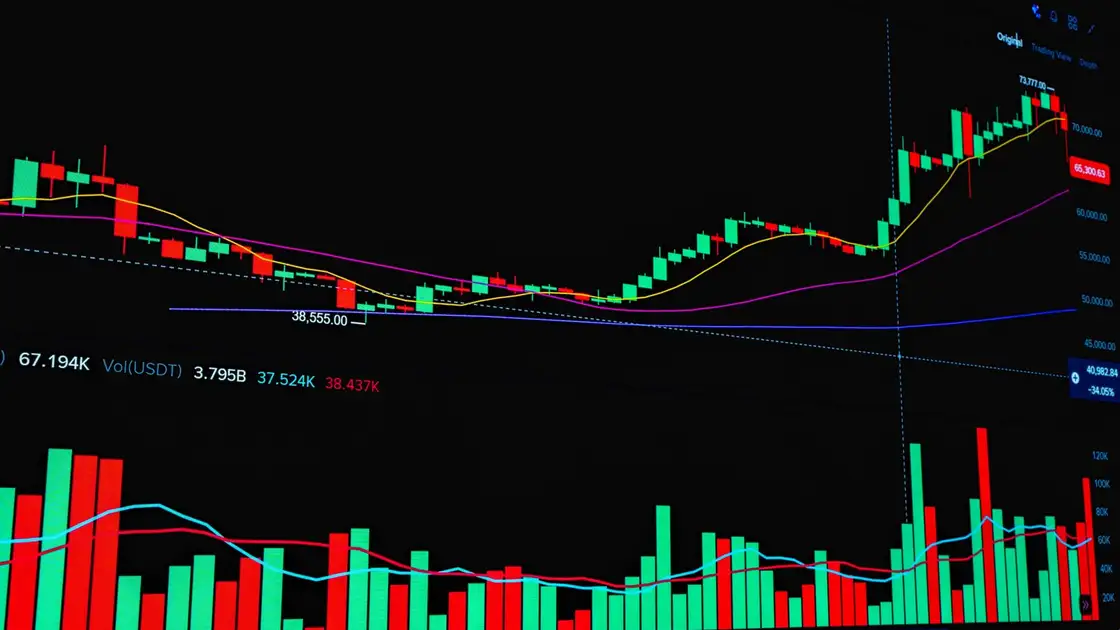
- Climb: the multiplier starts at 1.00x and rises along a curve that depends only on elapsed time.
- Cash out: a player who cashes out at 2.35x receives the stake multiplied by 2.35. Auto-cashout does the same at a preset target.
- Crash: the multiplier stops at the crash point, and anyone still in loses the stake.
The crash point is decided before the round starts, derived from the provably fair seed described below, and is never influenced by player behaviour. The visible curve is a presentation of a result that already exists, the same principle used in roulette and slots. Because rounds are short and betting is continuous, crash game development leans more on real-time engineering and exposure management than on art assets, although tense visual and sound design still drives engagement.
Provably Fair Hashing: Seeds and Hash Chains
Provably fair means players can verify, after the fact, that the operator did not choose a result after seeing the bets. Crash produces one result per round for everyone, so the usual construction is a SHA-256 hash chain rather than per-player seeds.
- The operator generates a secret terminal seed and hashes it repeatedly to build a long chain, one link per round.
- The last hash in the chain is published as a commitment before play begins.
- Rounds are played in reverse. Each round reveals the value whose hash equals the previously revealed one, so anyone can check that hashing the new value reproduces the old one.
- The crash point is computed from an HMAC of the round's hash with a public salt, such as a block hash chosen after the chain commitment, so the operator cannot grind the chain for favourable results.
One common derivation takes the first 52 bits of the HMAC output as an integer, converts it to a uniform number u between 0 and 1, and sets the crash point to the larger of 1.00 and floor(100 x (1 - edge) / (1 - u)) / 100. A share of rounds equal to the house edge then land on 1.00x, and the chance of reaching any multiplier m is approximately (1 - edge) / m. Use integer arithmetic in production to avoid floating-point drift, publish a verifier that players can run themselves, and keep the seed material in an HSM or managed key service.
Provably fair proves the integrity of results; it does not replace testing. Our RNG integration and testing service covers the certification side, and a security audit and penetration test should always cover the seed-handling path.
Real-Time Multiplayer Architecture with WebSocket
In crash game development the server owns the truth. A round engine decides when betting closes, when the climb begins and when the crash happens, and clients subscribe over WebSocket to receive those events. To keep bandwidth low, the server sends the round start time and growth parameters once; each client then draws the curve locally against a synchronised clock and waits for the authoritative crash event. Bets and cash-out requests travel back over the same socket with unique request IDs, so retries are idempotent.
For the game itself, see how our team approaches slot game development, from maths model to certified build.
| Layer | Typical technology | Job |
|---|---|---|
| Gateway | WebSocket servers in Node.js or Go behind a load balancer | Connections, authentication, rate limiting, fan-out |
| Round engine | Go or Node.js service with Redis state | Round lifecycle, crash point, cash-out matching |
| Event stream | Kafka | Durable log of bets, cash-outs and settlements for wallet and reporting |
| Ledger | PostgreSQL | Balances, transactions and audit trail |
| Client | HTML5 with Pixi.js or Canvas, React shell | Curve rendering, bet panel, chat |
Latency is the defining pressure. Delivering each tick to thousands of sockets needs pub/sub fan-out across gateway pods on Kubernetes, backpressure so slow clients drop to a lower update rate, and reconnect logic that resumes from the last sequence number. Only one engine instance should lead a given room, with leader election and persisted round state so a restart never loses an in-flight round. Load-test with reconnect storms; our performance optimization work targets these bottlenecks.
House Edge, RTP and Exposure Limits
With the derivation above, the expected return on a stake is the same whatever multiplier a player targets: aiming for 1.5x or 50x both give an RTP of one minus the edge. That makes the house edge a single, clear configuration value in any crash game development project. Operators commonly choose an RTP in the high-90s percent range, but the exact figure is a commercial and regulatory decision rather than a technical one. What differs is variance: low targets win often and small, high targets win rarely and large.
The risk work sits around that fixed maths:
- Maximum bet and maximum win per round, enforced before the round starts.
- An optional multiplier ceiling that ends the round at a set value. This changes the distribution slightly, so the capped RTP must be calculated and certified rather than assumed.
- Aggregate exposure monitoring: the sum of stakes times auto-cashout targets across open bets, with alerts when potential liability exceeds bankroll policy.
Auto-Cashout, Auto-Bet and Cash-Out Fairness
Auto-cashout is the feature that makes crash playable on a poor connection. The target is stored server-side with the bet, and the round engine pays out the moment the curve passes it, independent of client latency. Players who cash out manually face a race between their click and the crash, so the rules must state how the server resolves it: by server receipt time against the crash tick, with any latency tolerance disclosed and included in certification.
Auto-bet runs repeated bets with strategies such as stop-loss, take-profit and increase-on-loss. These are popular, but they are also where problem gambling patterns show up, so limits, reality checks and session caps must apply to every automated bet, and the platform should be able to stop a scripted session instantly.
Social, Chat and Live Features
Crash is a shared experience, and social features turn a solo clicker into a community. A live bets panel shows who is in and who has cashed out, and a chat room hosts banter and moderators.
Build moderation in from day one: word filters, rate limits, mute and report tools, and admin switches to disable chat or tipping per jurisdiction. Tipping and rain features carry extra anti-fraud and regulatory implications, so treat them as optional modules. The social layer shares the WebSocket infrastructure but should be isolated so a chat spike cannot slow cash-out processing. For operators who want crash inside a wider cash-game lobby, see our real money casino app development work.
Crypto Wallets and Payments for Crash Games
Crash is closely associated with crypto brands, and wallet design affects both safety and speed. Players typically deposit to per-user addresses, the platform waits for a confirmation threshold, and an internal ledger balance is credited in integer minor units. Bets and cash-outs settle against that ledger rather than the chain, which keeps rounds fast. Withdrawals pass through risk checks, hot-wallet limits and, where required, KYC/AML screening before funds leave.
- Support the stablecoins and networks your audience uses; fees and confirmation times differ widely by network.
- Keep the bulk of funds in cold storage, with a monitored hot wallet for payouts.
Our crypto payment integration and crypto casino development services cover wallets, custody and ledger design end to end.
Regulation, Certification and Caveats
Provably fair is a verification tool, not a licence, and crash game development for regulated markets must plan for that. Regulators such as the UKGC, the MGA, New Jersey DGE and the Nevada Gaming Control Board generally expect RNG and game testing by an accredited laboratory such as GLI, iTech Labs, eCOGRA or BMM Testlabs, along with approved game rules and player protection tools. Some markets do not permit crypto deposits or continuous-play crash formats at all, and offshore licences vary in what they require. Confirm the following with legal counsel before launch:
- Whether a crash-style game fits the local definition of an approved game type.
- Whether crypto deposits are permitted for licensed operators in the target market.
- How a hash-chain RNG is assessed against the lab's standard, for example GLI-19.
Distribution adds another layer. A casino game aggregator API lets partner operators integrate your title once, while our casino licensing and compliance team can map requirements market by market. Nothing here is legal advice.
How Sudonex Builds Crash Games
Sudonex builds crash titles as separate services: a seed and crash-point service, a round engine, a gateway, a wallet adapter and an HTML5 client, so each part can be tested and scaled on its own. We ship a public verifier, simulation tooling that runs millions of rounds to confirm the RTP, and the documentation test labs request. Our crash game development scope, budget and timeline depend on game modes, wallet and chain support, social features and target markets; a single-mode crash game with one wallet integration is a much smaller project than a multi-mode, multi-chain suite with a full back office.
Planning a crash game? Contact Sudonex to scope the maths, architecture and certification route. Operators remain responsible for holding valid licences and for serving only eligible adult players.